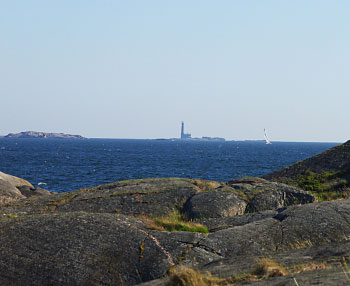

The Baltic Sea is the world’s largest brackish water basin. Its water is a mixture of salty ocean water and fresh water brought by numerous rivers and precipitation. The Baltic Sea covers an area of 422,000 km² and has an average depth of 56 metres. It is connected to the Atlantic Ocean through the narrow and shallow Danish Straits.
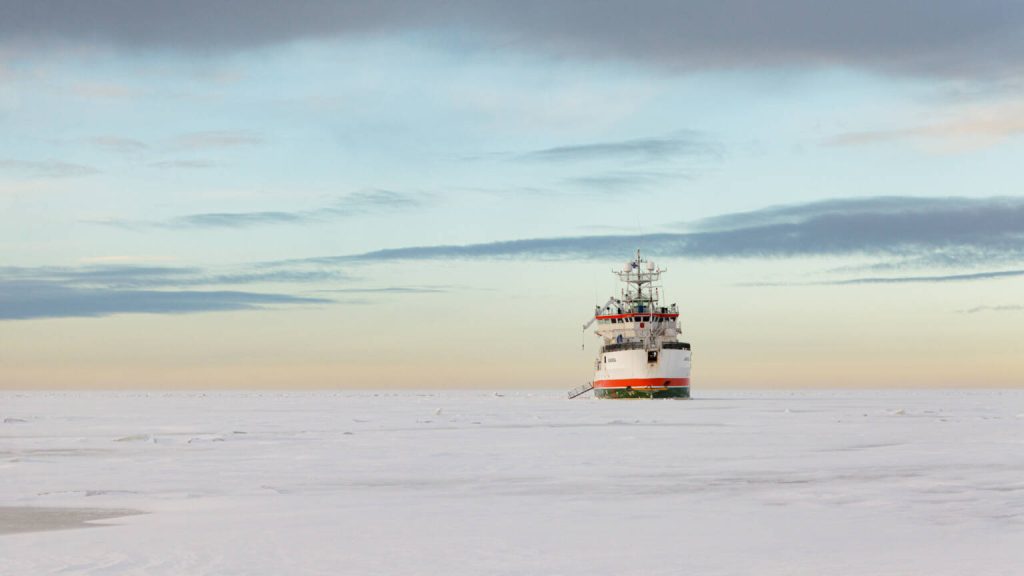
The Baltic Sea basin was formed over billions of years as tectonic plates moved and the Fennoscandian bedrock took shape. Its final form was created during the last Ice Age, when the weight of the ice first depressed the Earth’s crust and, as the ice retreated, the land gradually began to rise.
In addition to its relatively small size and gradual post-glacial development, the Baltic Sea is characterized by the absence of tides and a long northern winter, during which the sea is partially covered by ice. All these factors have shaped its flora and fauna into a unique ecosystem, where marine and freshwater species coexist in a combination found nowhere else in the world.
Due to its uniqueness and the fact that all surrounding countries are highly industrialized, the Baltic Sea’s fragile environment has been subjected to a considerable pollution burden. It is often described as one of the most polluted seas in the world – not without reason.
For this reason, the Baltic Sea coastal states signed the Convention on the Protection of the Marine Environment of the Baltic Sea Area (the Helsinki Convention) in 1974. This agreement covers all major sources of pollution and prohibits the dumping of waste into the sea. It also bans pollution resulting from seabed exploration and exploitation, and stipulates that measures taken to protect the Baltic Sea must not increase pollution outside the convention area.
To implement the Helsinki Convention, the signatory countries established the Baltic Marine Environment Protection Commission – the Helsinki Commission (HELCOM). Its task is to continuously monitor the implementation of the convention and to issue unanimous recommendations to the governments of the contracting parties regarding its application. An international secretariat, as defined by the headquarters agreement, was established in Helsinki in 1980.
A revised and more binding version of the convention was incorporated into national legislation in nine Baltic Sea states in 2000, replacing the earlier agreement. The new convention also extends its scope to internal waters.
In spring 2002, the Finnish Government adopted its own policy decision on measures to improve the state of the Baltic Sea and to protect the marine environment.
To support Baltic Sea protection, the World Wide Fund for Nature (WWF) launched its own major campaign in 2001 – Operation Mermaid. Through this initiative, WWF offers all Finns opportunities to support Baltic Sea efforts and to take action themselves: “People need the sea. The sea needs people,” as the campaign slogan states.
In 2004, the Marine Environment Protection Committee (MEPC) of the International Maritime Organization (IMO) designated almost the entire Baltic Sea as a Particularly Sensitive Sea Area (PSSA). The Council of the Baltic Sea States supported IMO’s initiative to accelerate the phase-out of single-hull tankers in accordance with IMO regulations, and backed a ban on crude oil transport by such vessels in the Baltic Sea from 5 April 2005. Baltic Sea states have repeatedly expressed concern about the operation of these vessels.
The introduction of the GOFREP system (Gulf of Finland Reporting) in the Gulf of Finland on 1 July 2004 marked a significant step forward in maritime safety. The Gulf of Finland experiences heavy east–west traffic as well as dense passenger traffic (approximately 6 million passengers annually) between Helsinki and Tallinn. The rapid growth of Russian oil exports has further increased traffic through the area. A grounding or collision could result in loss of life or serious environmental damage to the vulnerable marine ecosystem.
Finland, Russia and Estonia jointly established a mandatory ship reporting system after it was approved by the IMO in December 2002. The system covers international waters in the Gulf of Finland. Finland’s responsibilities are handled by the Gulf of Finland Vessel Traffic Service Centre in Helsinki. By agreement between the countries, the international waters of the Gulf of Finland are divided into two monitoring sectors: Tallinn Traffic (Estonia) oversees the southern sector, while Helsinki Traffic (Finland) monitors the northern sector. The eastern sector, within Russian territorial waters, is monitored by Russia. St. Petersburg Traffic operates in cooperation with the Finnish and Estonian traffic control centres.
In Finland, research on the Baltic Sea is conducted by the marine research programme of the Finnish Meteorological Institute, which operates under the Ministry of Transport and Communications. The institute produces marine scientific data for decision-making and practical needs. Research focuses primarily on the Baltic Sea, but also on polar seas. The overall aim is to build a foundation for understanding the natural characteristics of the sea, with particular attention to societal needs such as maritime transport.
Research on the Baltic Sea is also carried out by the Finnish Environment Institute, regional environmental centres, and universities.
LINKS
- Ilmatieteenlaitos
- Itämeriportaali
- Helsingin komissio – HELCOM www.helcom.fi
- WWF:n Itämeri-kampanja – Operaatio Merenneito www.wwf.fi/itameri
- Council of the Baltic Sea States www.cbss.st
- Baltic Sea regional portal www.balticsea.net
- Puhdas Itämeri-hanke
- Baltic Sea regional portal
- www.baltice.org