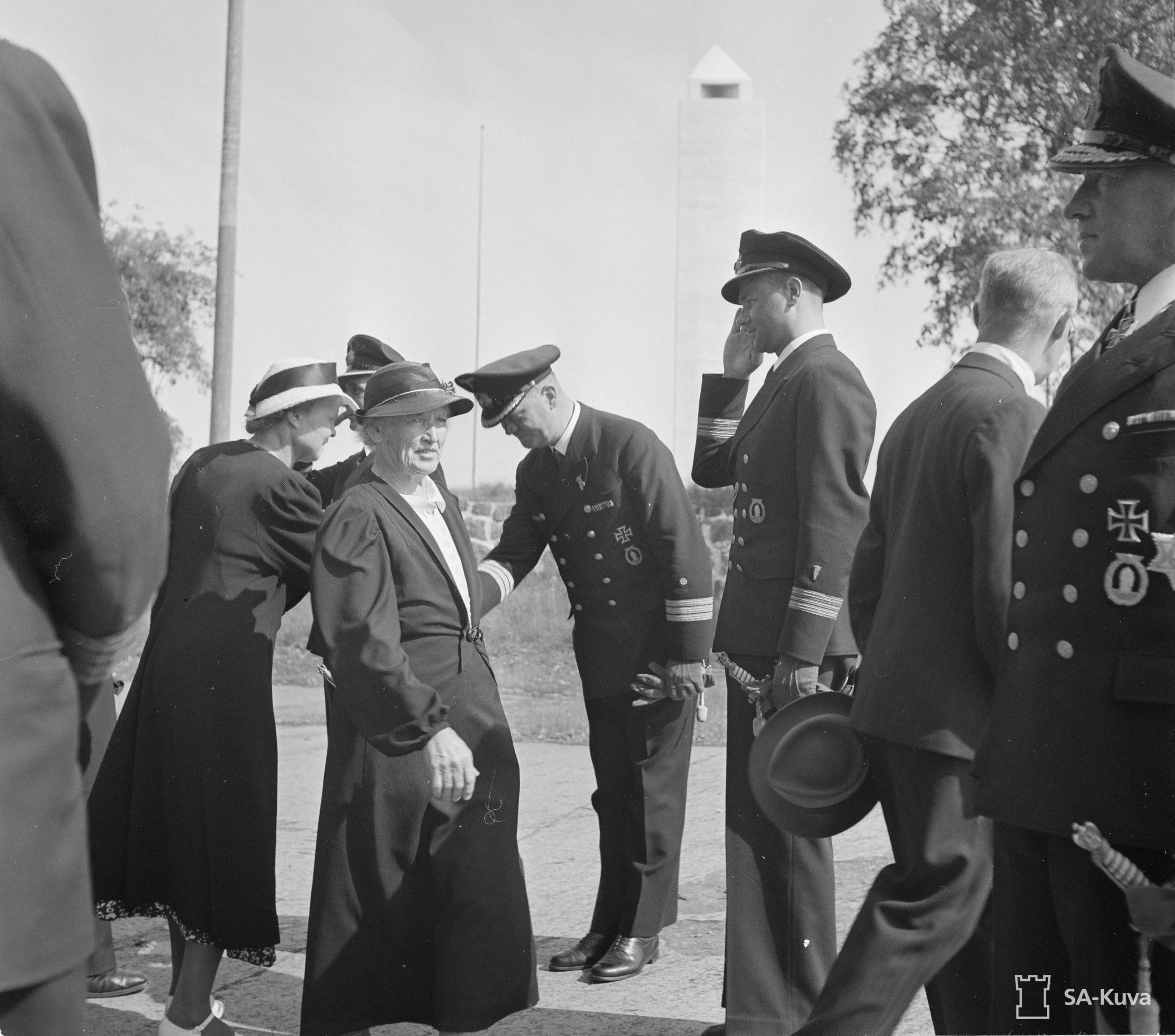
7.3.1931
The Patent and Registration Office confirms the association’s new name: Suomen Laivastoliitto – Förbundet för Finlands Flotta. The association’s first major goal, securing a modern navy, has progressed, and its focus now shifts more strongly from naval affairs toward merchant shipping. The new name also better reflects its role as an umbrella organization for regional actors – local associations.
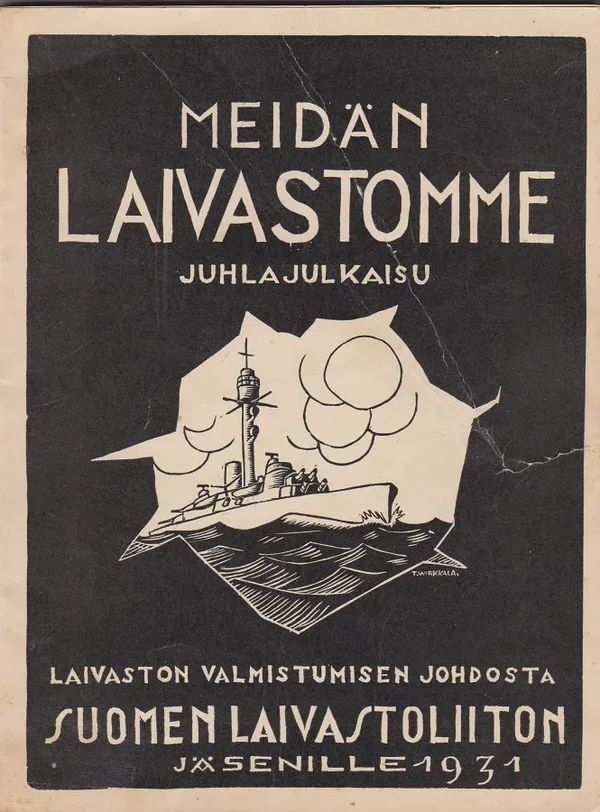
1931
The first annual yearbook published by Laivastoyhdistys, titled Meidän laivastomme, is released.
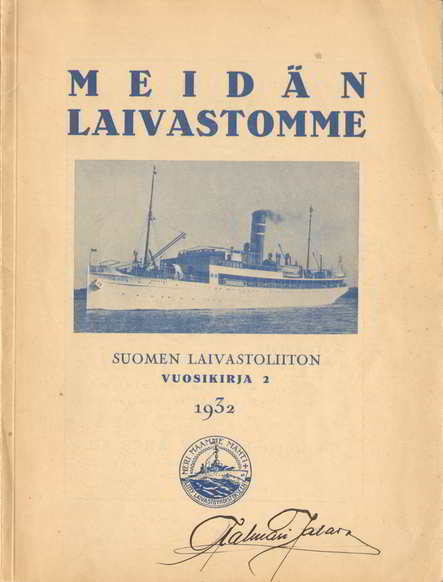
1932
The second annual yearbook titled Meidän laivastomme is published.
31.12.1932
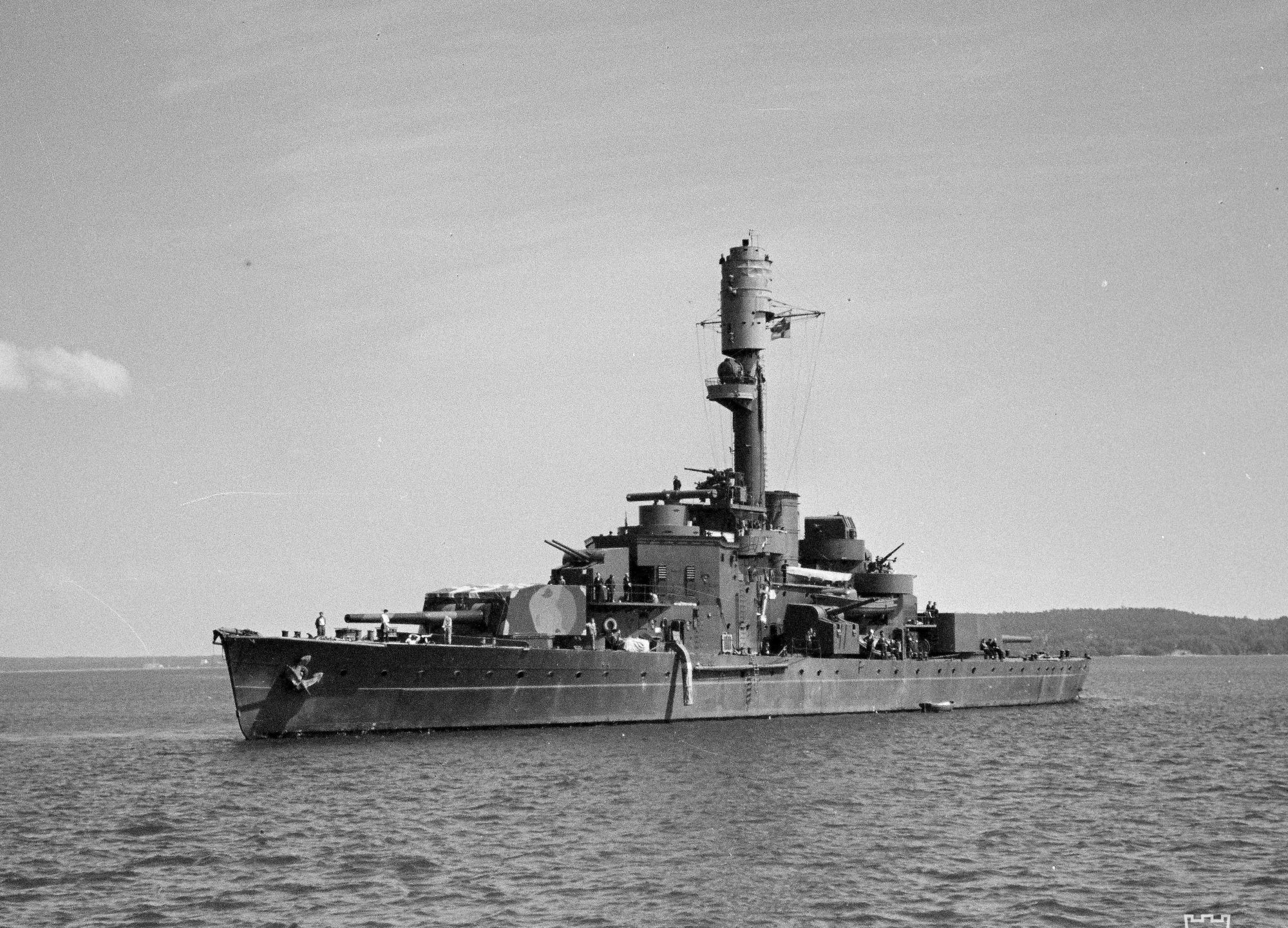
The coastal defence ship Väinämöinen enters service.
1933
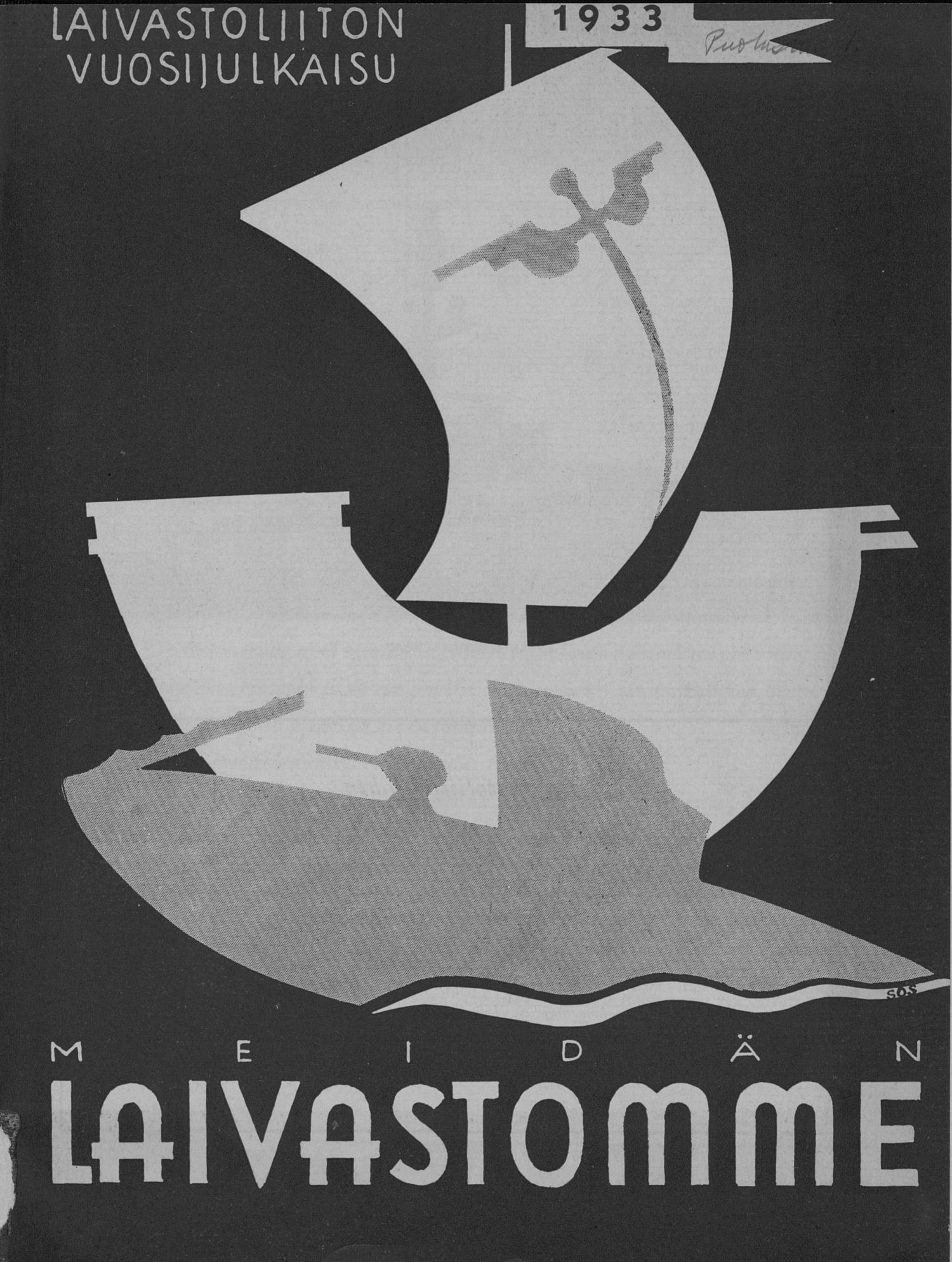
The third annual yearbook titled Meidän laivastomme is published.
1934
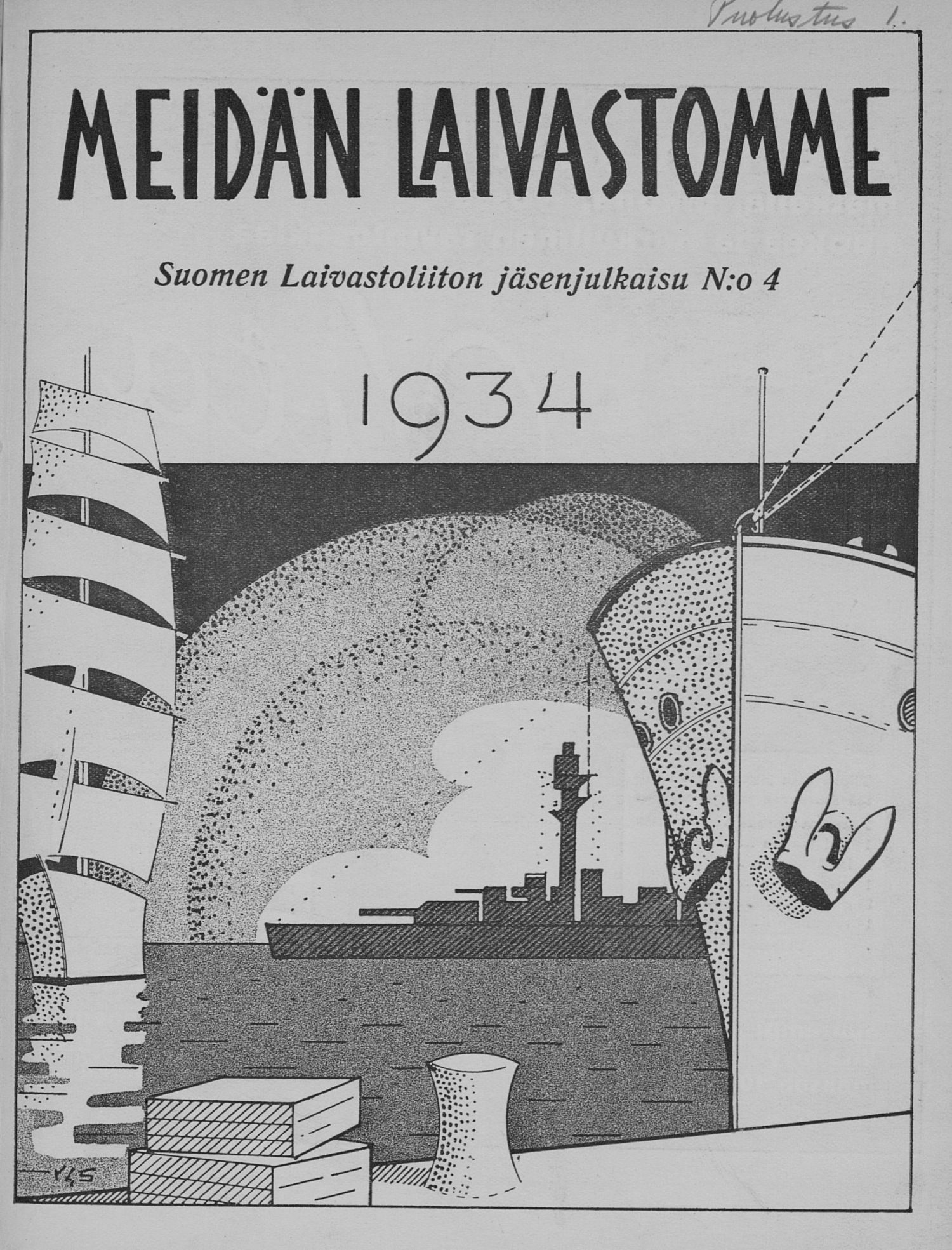
The fourth annual yearbook titled Meidän laivastomme is published.
17.3.1934
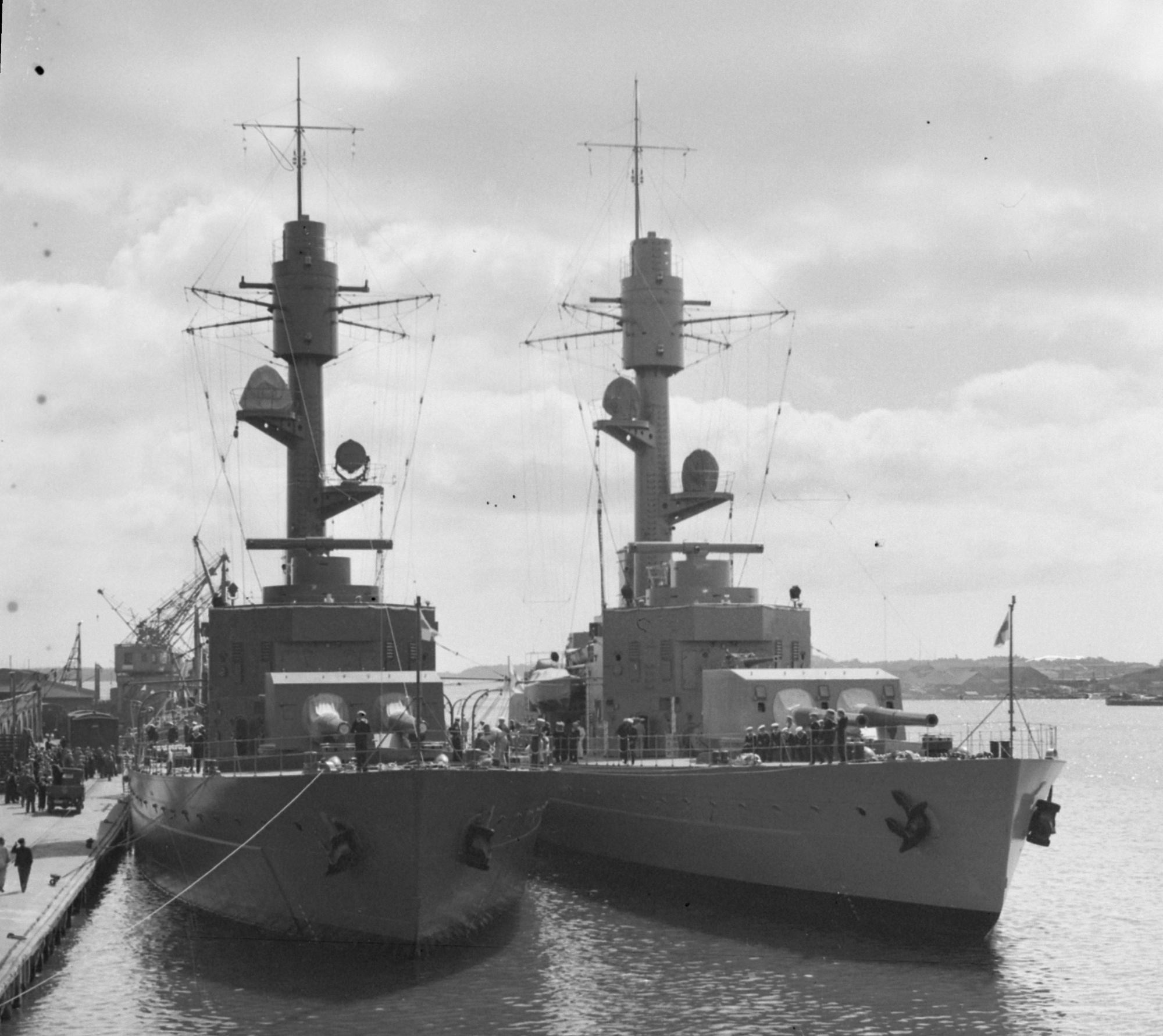
The coastal defence ship Ilmarinen enters service.
1935
The magazine Suomi Merellä is published for the first time in cooperation between the Naval Officers’ Association and Laivastoliitto.
1935
Ten years have passed since the sinking of the torpedo boat S2. Laivastoliitto, the Naval Officers’ Association and the Finnish Lifeboat Institution organize a memorial event, which is broadcast on radio. At the same time, an annual lecture series on naval themes begins, arranged by regional branches. In addition to lectures, some events also include films with a naval theme. Outreach activity is organized not only along the coast but also inland, and as a result many young people from inland areas apply to join the navy.
This promising activity is interrupted by the outbreak of the Winter War. During the Interim Peace, Maritime Brothers receive help from Laivastoliitto in arranging veterans’ events. In 1943 Laivastoliitto alone takes responsibility for the arrangements.
1936
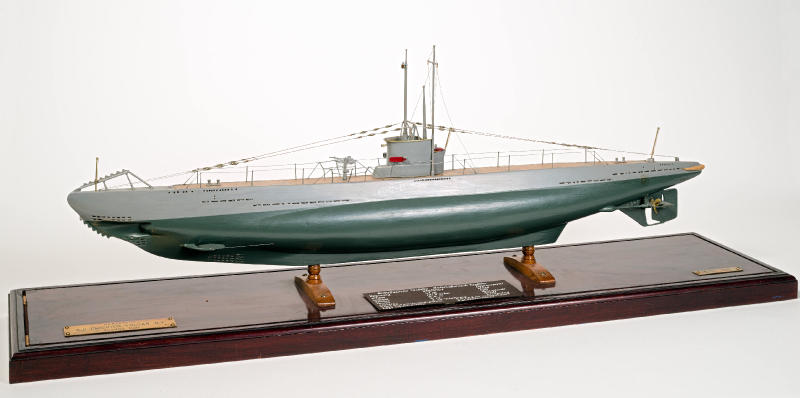
The submarine CV 707, left in Turku by the Germans, is acquired for Finland and renamed Vesikko.
26.4.1936
Suomen Laivastoliitto celebrates its tenth anniversary with a formal gathering. After the council meeting, the annual meeting is held and distinguished members are honored with merit crosses. Admiral G. von Schoultz receives the highest distinction, the golden merit cross. A silver merit cross is awarded to Chief Engineer Lauri Helenius, Engineer Tauno Liuksiala, Dr. Almar Harlin and Captain G.V. Löfgren. After the annual meeting, Laivastoliitto and the Naval Officers’ Association hold a lecture event featuring a review of Laivastoliitto’s first decade, a presentation on the current state of the shipbuilding industry, and congratulatory speeches. The anniversary concludes with a dinner.
1936
A Travel and Maritime Fair is held in Helsinki. Laivastoliitto takes part in organizing a naval demonstration in which the public is taken out to sea to watch naval displays and ship movements.
1937
The association’s council and executive board are merged into a single board.
1938
Laivastoliitto publishes the pamphlet Itsenäisyytemme vaarassa – aukko valtakunnan puolustamisessa, which takes a stand on the continued weakness of Finland’s navy.
4.9.1938
Laivastoliitto joins the Coastal Fleet and the Naval Officers’ Association in a naval demonstration off Helsinki. Visitors are shown artillery fire, submarine and motor torpedo boat attacks, mine-laying and depth charge drops.
Watch the 1938 naval demonstration below (Elonet, film length 7 minutes, but the picture fades after about 4 minutes):
1939
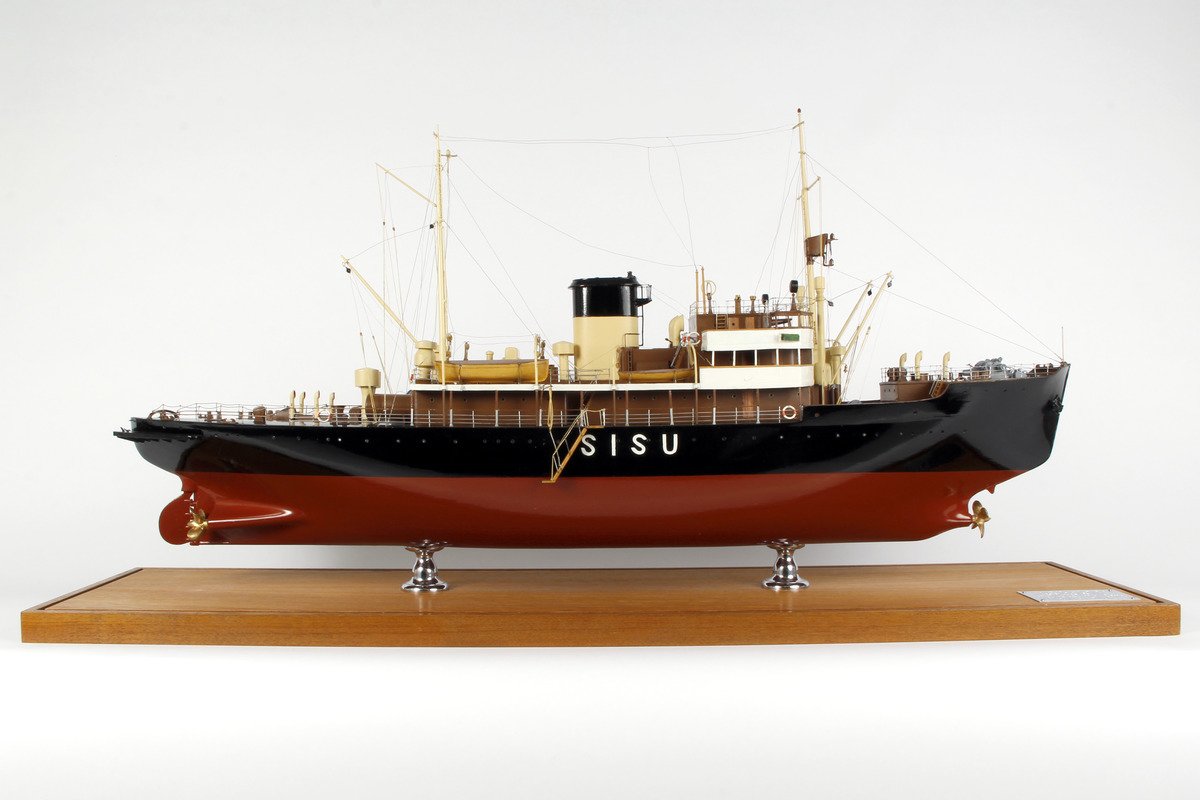
The icebreaker Sisu is completed in Helsinki and becomes a mother ship for submarines.
8.-9.12.1940
A two-day seminar for the press is organized to introduce Finland’s war and merchant fleets and the shipbuilding industry to media representatives. Maritime symposia later become an established part of the association’s activities, although not until much later. The second maritime symposium is held in 1974, after which they are organized regularly.
9.7.1942
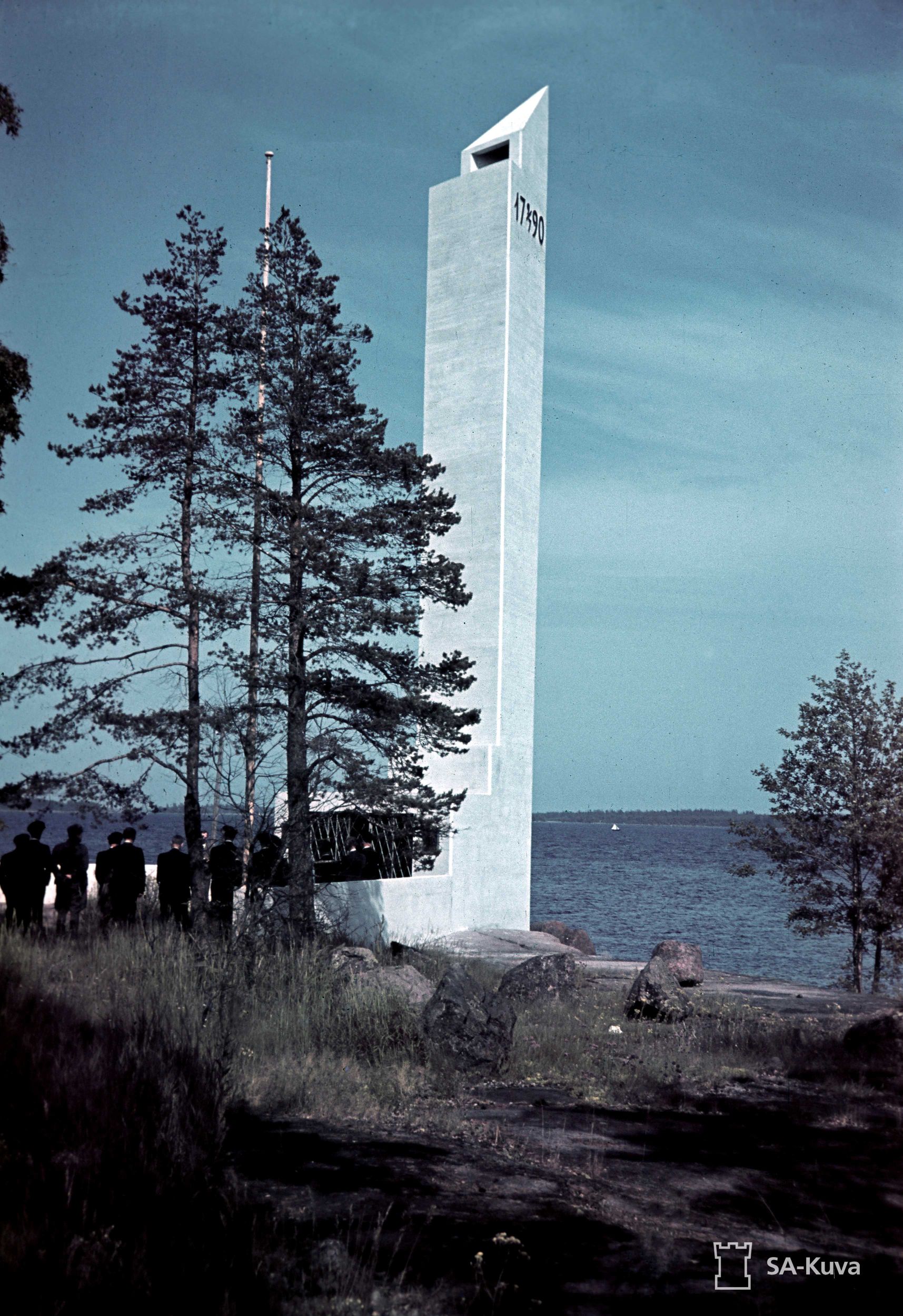
A memorial to the Second Battle of Svensksund (1790) is unveiled on Varissaari in Kotka. The day is also the Navy’s anniversary. Laivastoyhdistys takes part in the realization of the memorial.
1943
The first navy days for upper secondary school students are organized. Their purpose is to introduce young people to the navy and to youth sailing. Participants are shown naval equipment and six lucky boys are given the chance to go on a submarine trip. The navy days also launch the model-building activity coordinated by the association. The navy days end in autumn 1946, by which time they have been held ten times.
6.3.1946
Laivastoliitto organizes a celebration of merchant shipping at the Salo Volunteer Fire Brigade hall. Topics include the role of the merchant fleet in Finland’s economy and Laivastoliitto’s work with boys. The event also features a lively talk about ocean sailing. Among the performers are Georg Malmstén and George de Godzinsky. Similar youth-oriented events are organized in the following years as well.
1947
A craft exhibition is organized during the Youth Culture Days in Helsinki. Laivastoliitto takes part in the exhibition.
1947
The first Sea Boys’ Camp is organized at Pirskeri. The aim is to introduce young boys to the navy and maritime life and to teach a range of practical seafaring and everyday skills. Camps are organized between Kotka and Ii until 1965, with a total of 15 camps. Participants are 10–17 years old, and annual attendance ranges from 23 to 48. In 1964 the establishment of a maritime training center in the Sarvsalo and Tavistholm area outside Porvoo is discussed, but in the end the camp activity is moved afloat.
Ilkka Toikka, who took part in the camp, wrote a memoir about it in 1999.
1947
Laivastoliitto publishes the first Meripoikakalenteri.
13.6.1950
A delegation is elected for Laivastoliitto, replacing the earlier large board. The delegation elects a board with no more than ten members.
1950
The name of Laivastolehti is changed to Suomen Laivasto – Finlands Flotta in order to better reflect the magazine’s broad scope.
13.9.1951
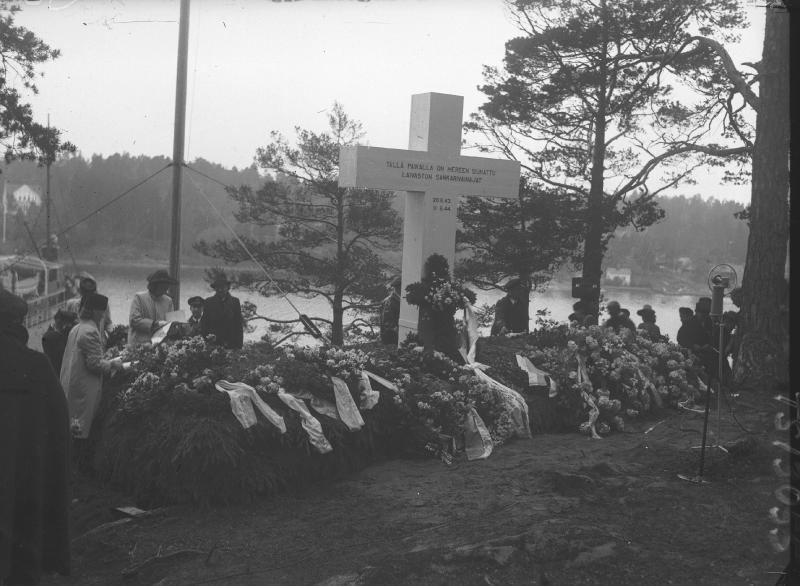
The renewed Navy Memorial Cross is unveiled in Naantali. Laivastoliitto is represented at the event by its managing director and executive director.
16.11.1951
The association celebrates its 25th anniversary. The daytime event is held in the small ceremonial hall of the University of Helsinki and the evening celebration aboard S/S Arcturus. The following day invited guests visit Wärtsilä’s Hietalahti shipyard and Valmet Oy’s shipyards in Suomenlinna and Katajanokka. The visit concludes with lunch at the Officers’ Club in Katajanokka.
During the occasion, Laivastoliitto receives a flag designed for the association by the women’s club of Satakunta Laivastoyhdistys. It was designed by textile artist Kirsti Ilvessalo and produced by Suomen Käsityön Ystävät Oy. The flag is navy blue, bears seven gold-colored anchors, and features Laivastoliitto’s emblem in the upper left corner. Its size is 120 x 140 cm.
11.3.1955
A ship model exhibition is held at Stockmann’s department store in Helsinki from 11 to 19 March. Laivastoliitto organizes the exhibition, which attracts about 10,000 visitors.
From 6:30 onward, the ship model exhibition is shown:
1956
The magazine Suomen Laivasto changes its name to Navigator.
1956
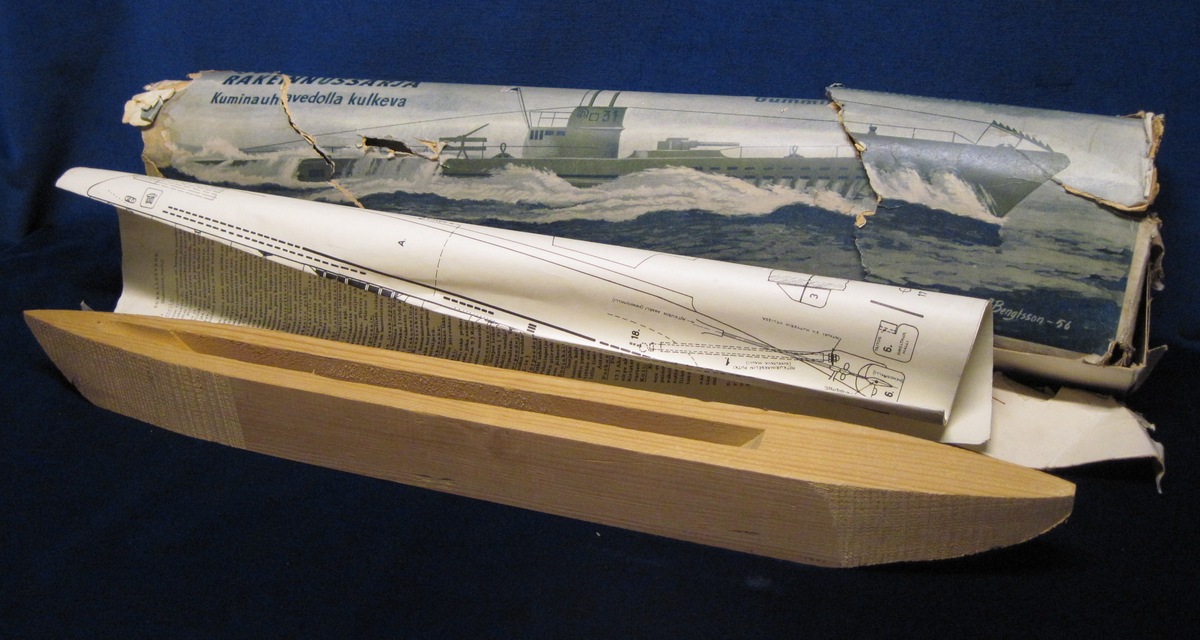
Model builders are offered a submarine-themed kit. The finished submarines compete in Helsinki Swimming Stadium, where the winning model dives 28 metres. Model building had begun during the war years as part of the navy days for youth. The models are exhibited and the chosen model varies from year to year. Building activity ends in the late 1950s, but the tradition of model exhibitions continues in the association’s work to this day.
4.10.1956
A memorial event marking the 30th anniversary of the loss of S2 is held in Reposaari together with the Finnish Lifeboat Institution and the support association of coastal soldiers.
7.7.1957
Laivastoliitto organizes a Ruotsinsalmi celebration together with the Finnish Lifeboat Institution, the Kymenlaakso Museum Society and the Navy. The event also features the minelayer Ruotsinsalmi, the minesweeper Rymättylä and the motor gunboat Vasama 2.
1963
The first volume of Suomen Merikirjallisuuden Bibliografia, published by Laivastoliitto, is released. The work eventually grows to four volumes, the last of which is published in 1981.
13.-29.9.1963
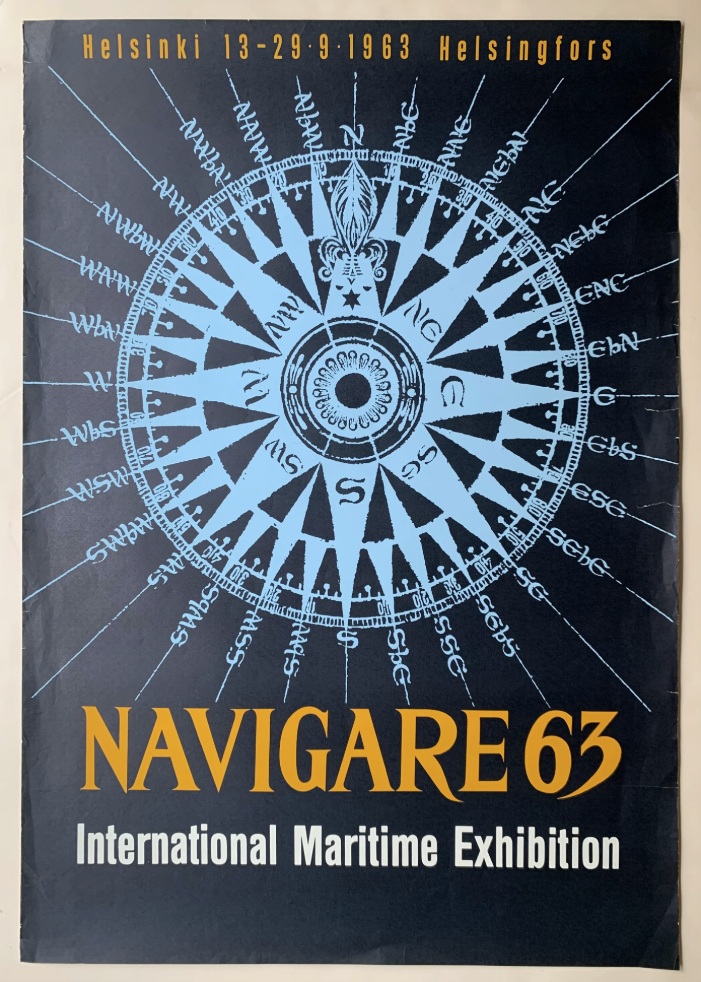
Laivastoliitto organizes the Helsinki Navigare fair and carries the main responsibility for the arrangements. The fair presents shipbuilding, shipping companies, merchant shipping, the navy, maritime administration, marine research, industry organizations and much more. Visitor numbers reach about 100,000.
3.8.1964
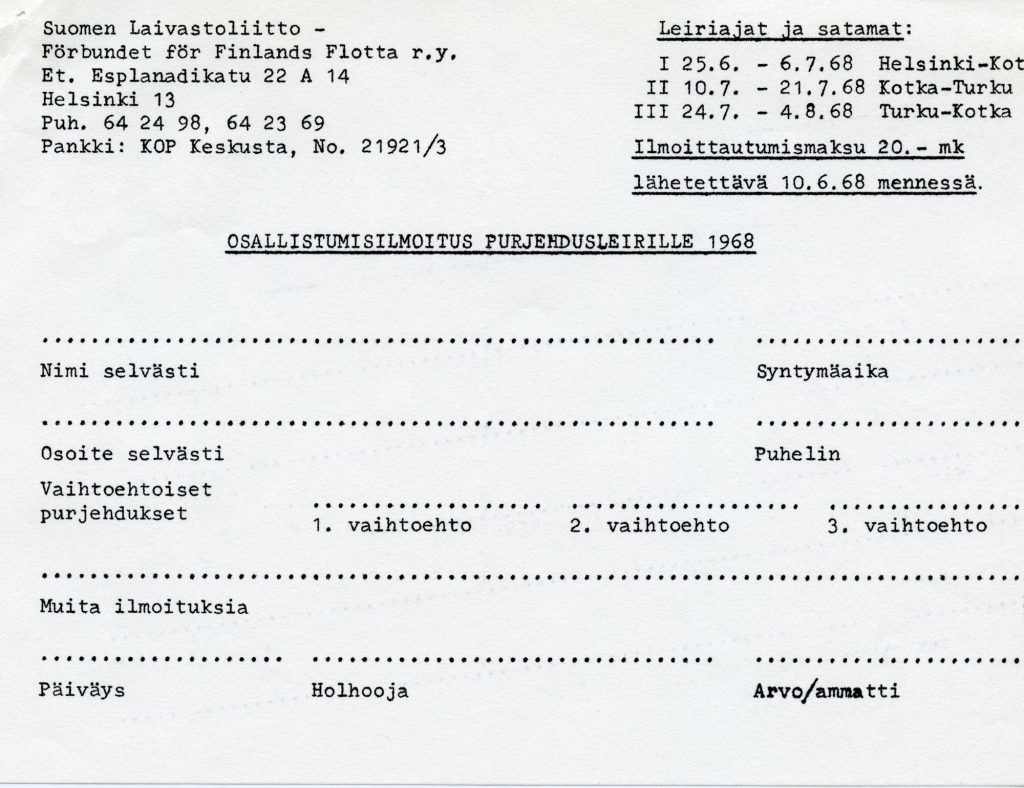
The first floating camp for young people is organized in Kemi. Participants in the ten-day camp are accommodated in tents and partly aboard the galeas Remiga. Eight of the ten days are spent at sea. In 1966–1967 the association is allowed to use the galeas Astrea free of charge from Hollming shipyard. After Astrea, the square-rigged schooner Amphion is rented, and the schooner Lys is used for four summers. In 1976 the galeas Astrid is used, and in 1977 sailing takes place on the Polish-rented gaff schooner Zew Morza. Youth sailing is a major financial challenge for the association and cannot be arranged every year. Youth work nevertheless remains part of the Maritime Association’s activities, and by the late 1970s discussions begin on how youth sailing can be continued in the future.
1966
Laivastoliitto celebrates its 40th anniversary with a daytime event at the Swedish School of Economics and an evening celebration at Brändö Casino.
1967
The association struggles with financial difficulties. A legislative change has made it harder to receive donations, and one option considered is winding up the association. Instead, it is decided to discontinue the Sea Boys’ Camps, as they have been a major expense. This improves the association’s finances, and membership recruitment is also intensified.
15.9.1967
Laivastoliitto builds an exhibition section for Navigare 67 portraying 130 years of Finland’s maritime history. The 280-square-metre section displays 150 scale models, enlarged photographs and weapons. The exhibition runs from 15 to 24 September and attracts about 55,000 visitors.
17.4.1969
A maritime symposium is organized at Hotel Palace. Topics include the outlook for international maritime policy, Finland’s need for sea transport and the requirements it places on the merchant fleet, as well as labour issues in the shipping industry.
14.11.1969
The board of Laivastoliitto appoints a school ship committee to plan the acquisition of a training sailing vessel. In May 1972 the committee submits its report and proposes the purchase of a new sailing ship. This does not materialize, but its proposal to establish a sail training foundation is realized a few years later.
28.4.1970
The annual meeting decides to change the name of Laivastoliitto to Maritime Association.
26.10.1970
The Patent and Registration Office confirms the association’s new name: Meriliitto – Sjöfartsförbundet ry.